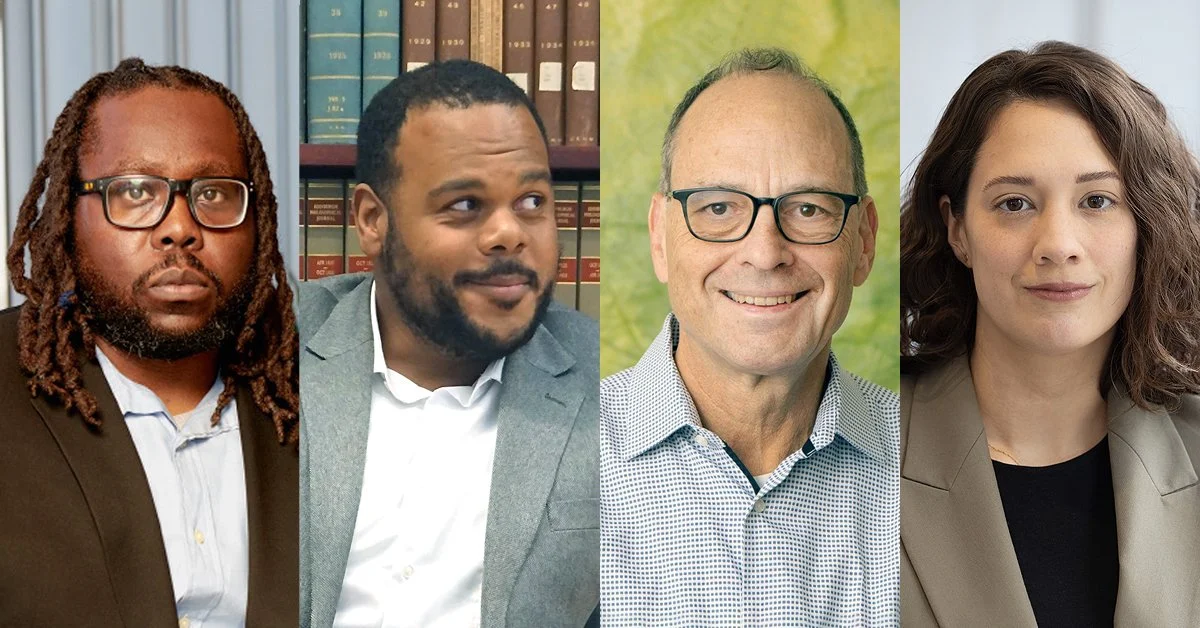
Eight research leads drive SRI’s mission forward with new projects
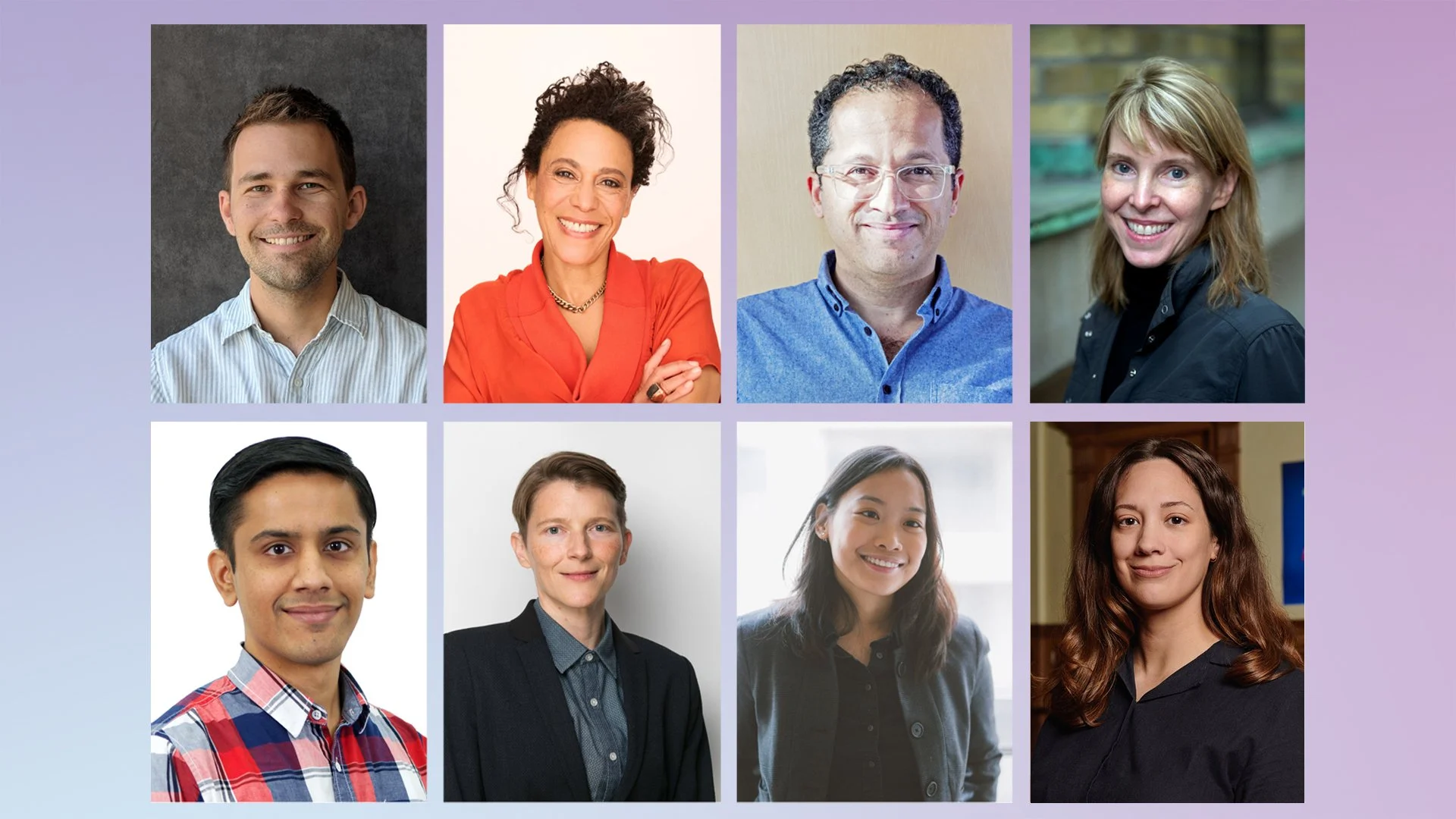
With two new appointments and six renewed roles, the Schwartz Reisman Institute’s 2025–26 cohort of research leads will advance projects on trust, creative pedagogy, agentic AI, democratic fairness, and human–machine relationships, fostering public dialogue and policy insights on the transformative role of advanced technologies like artificial intelligence.
The Schwartz Reisman Institute for Technology and Society (SRI) is pleased to announce the appointment of two new University of Toronto faculty members to its research leadership team for the 2025–26 academic year. Michael Inzlicht and Avery Slater join six continuing research leads—Ashton Anderson, Beth Coleman, Sheila McIlraith, Nisarg Shah, Anna Su, and Karina Vold—whose renewed roles will see them advance an ambitious range of projects exploring the intersection of technology and society.
Together, these scholars will spearhead initiatives that reflect the Institute’s mission to ensure that powerful technologies like artificial intelligence (AI) are developed and governed in ways that benefit all of humanity. Their work spans AI safety, trust, fairness, creativity, law and policy, human–AI relationships, and public engagement, with activities ranging from large-scale conferences and public talks, to open-source tool development and interdisciplinary research collaborations.
Read on to learn more about forthcoming activities from SRI research leads during the 2025–26 academic year.
Get to know our research leads:

Ashton Anderson (Department of Computer Science) will advance projects that bring technical innovation into conversation with community-building. An expert in computational social science, Anderson is co-leading a research project to develop, test, and deploy AI conversational agents designed to cultivate long-term virtues, such as patience, kindness, generosity, and self-control. He will also develop an interdisciplinary “research slam” showcasing faculty and student work on pressing technology and society issues.

Beth Coleman will lead a newly-formed SRI AI & Trust Working Group, which will convene interdisciplinary researchers through monthly meetings and a dedicated workshop to study what sociotechnical factors shape trust and trustworthiness in AI systems. The group will develop insights for ensuring that AI systems earn and maintain public trust while preserving human agency and democratic legitimacy. Coleman will also convene After the Ellipses, co-presented with U of T’s Knowledge Media Design Institute, an event that will explore the significance of absence, loss, and incompleteness in human and machine understanding.
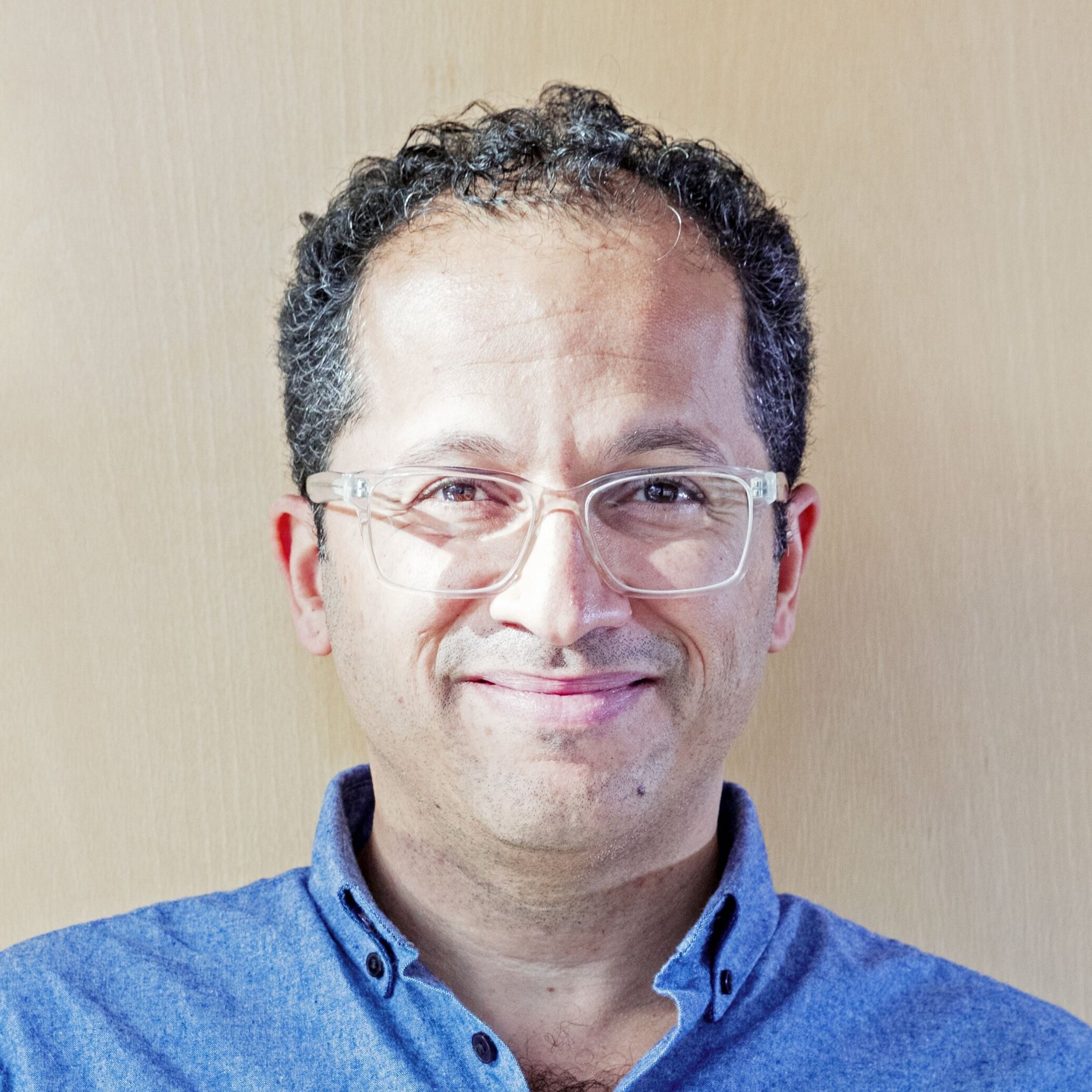
Michael Inzlicht (Department of Psychology) will seek to address the growing role of AI as therapist, companion, and coach through his project, “AI and human relationships: Opportunities and risks in the age of artificial intimacy.” He will convene an interdisciplinary conference on the topic, with the goal of generating a white paper and participating in podcasts. By convening experts across psychology, computer science, philosophy, and policy, Inzlicht aims to provide actionable guidance to policymakers, practitioners, and the public on the opportunities and risks of AI in intimate human domains.

Sheila McIlraith holding a dual appointment as SRI Associate Director and Research Lead, Sheila McIlraith (Department of Computer Science) will advance her CIFAR CAISI Catalyst Grant research on deployer-driven safety measures for AI agents. Her project addresses the rising risks posed by agentic systems, especially for small and medium-sized enterprises, which often lack the tools and expertise to prevent harmful or unsafe AI behavior. Working with postdoctoral researchers Toryn Klassen and Silviu Pitis, McIlraith will develop technical mechanisms for deployers to incorporate sector- and jurisdiction-specific requirements as well as behavioral constraints such as social norms that will guide and constrain agent behavior. By combining insights from social science and technical fields, the project aims to produce accessible safety measures and governance models to help organizations deploy AI responsibly. In addition, as a CIFAR Canada AI Chair at the Vector Institute, McIlraith continues to advance AI research, further strengthening Canada’s leadership in this critical area. As SRI Associate Director, McIlraith also continues to co-lead SRI’s Embedded Ethics Education Initiative (E3I), which integrates ethical considerations into core computer science curricula. This coming year, the program will launch a new E3I Graduate Teaching Fellowship to support philosophy graduate students who are teaching as part of the program.

Nisarg Shah (Department of Computer Science) will develop open-source tools that put democratic and fairness principles into practice. An expert on algorithmic fairness, Shah will develop a democratic summarization library to distill large sets of public statements into representative summaries with provable guarantees, and a preference-based fair AI library offering scalable, accessible implementations of fairness criteria grounded in social choice theory. These resources aim to serve academics, policymakers, and industry professionals alike.

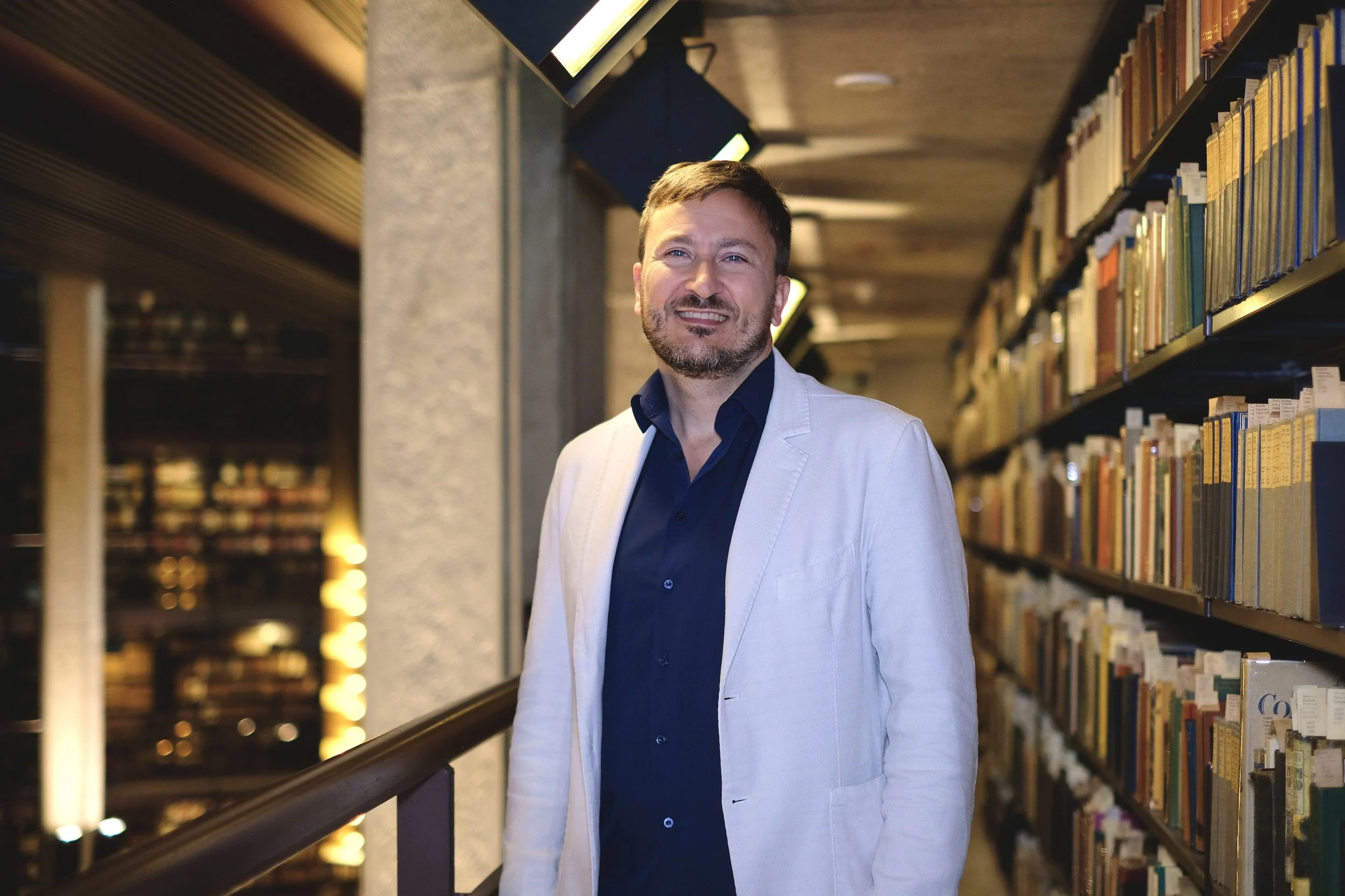
Avery Slater (Department of English) will explore the intersection of machine learning and creativity, focusing on AI's power to reshape how we learn and create in the contemporary world. In 2026, Slater will convene a symposium on AI, play, and gamification. She will also talk with leading authors and public intellectuals on AI’s social futures, extending her track record of fostering public engagement with the social impacts of technology.

Anna Su (Faculty of Law) will expand her research at the intersection of law, human rights, and AI, launching projects exploring the legal frameworks for agentic AI systems, and a working group to investigate potential regulatory guidance for social AI applications such as therapy and legal chatbots. Su will also bring conversations regarding AI and human rights through events exploring the moral assessment of animals and AI. These initiatives will produce outputs for policymakers, professional bodies, and the public, reinforcing SRI’s role as a trusted source of interdisciplinary legal insight on emerging technologies.

Karina Vold (Institute for the History and Philosophy of Science and Technology) will organize a fall 2025 edition of her Technophilosophy September Soiree event on social AI, continuing her tradition of hosting large-scale public conversations on philosophical questions about technology. Vold is also co-leading the development of an edited anthology publication with Sheila McIlraith, which will bring together leading thinkers from diverse fields to reflect on how AI may shape economies, cultures, and human life. The contributions will be published in a freely accessible, multilingual online volume, launching alongside a public event featuring the authors in conversation.
About SRI research leads
Research leads are core members of the Schwartz Reisman Institute’s academic community, helping to shape SRI’s research direction and programming while leading interdisciplinary projects that connect scholarship to real-world impact. Their work blends community engagement through mentorship, public events, and collaborations with external-facing initiatives that translate research into accessible outputs for policymakers, industry, and the public.
“Our research leads represent the best of what SRI stands for: bold, interdisciplinary thinkers who connect rigorous scholarship with real-world impact,” said David Lie, Director of the Schwartz Reisman Institute for Technology and Society. “They set the direction for the Institute by advancing projects that reach beyond the university, whether through public dialogue, policy engagement, or new tools and practices. This year’s cohort will help ensure that technologies like AI are developed and governed in ways that truly serve the public good.”
Please join us in welcoming Michael Inzlicht and Avery Slater to the team, and in supporting all of our research reads as they advance projects that will deepen understanding, foster innovation, and ensure that technology serves the public good.
Want to learn more?
Browse stories by tag:
- AI
- AI safety
- AI trust
- Computer science
- Computer security
- Copyright
- Cybersecurity
- Data
- Economics
- Education
- Engineering
- Ethics
- GPO-AI
- Governance
- Health
- Human Rights
- In the Media
- Jobs
- LLMs
- Law
- Normativity
- Philosophy
- Privacy
- Privacy Series
- Psychology
- Public Policy
- Recommenders
- Regulation
- Reports
- Trust
- Workshops