
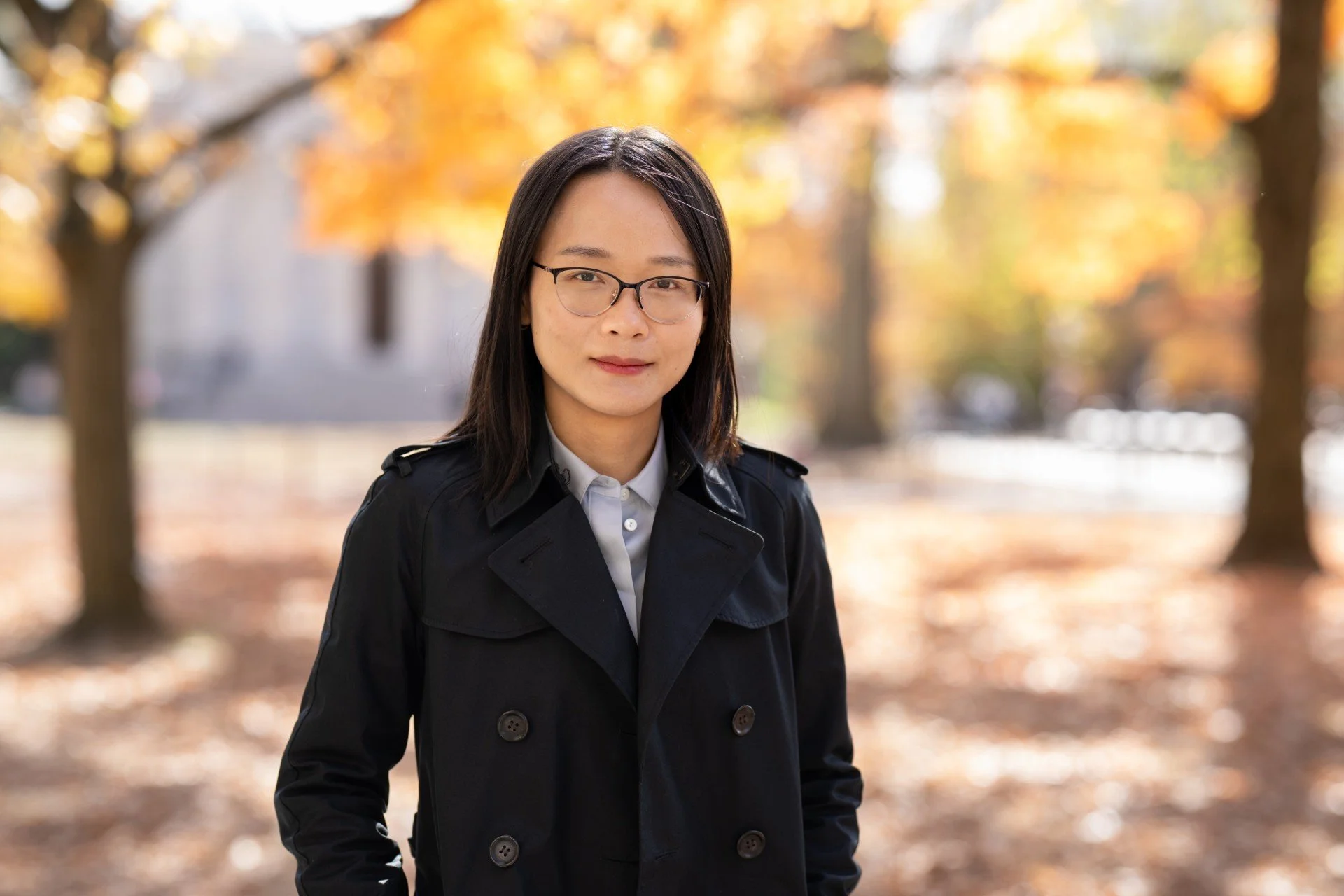
The SRI Seminar Series welcomes Huili Chen, an assistant professor in the Faculty of Information at the University of Toronto. An interdisciplinary researcher, scientist, and designer, Chen studies human experience in the context of intelligent machines, integrating ideas and methods from computer science, cognitive and behavioural sciences, design, and philosophy.
As claims about what AI systems understand become increasingly common, important questions remain about what those claims mean and what kinds of evidence can support them. Drawing on her recent research, Chen will introduce a framework for distinguishing among different accounts of machine understanding and consider how these distinctions can inform AI evaluation, safety, and responsible deployment.
Talk title:
“Understanding in intelligent machines”
Abstract:
What do artificial intelligence systems “understand”? Recent advances appear to expand what machines grasp, with image recognition systems seeming to understand objects and scenes and large language models seeming to understand language. The question matters not only for assessing a system's intelligence but also for evaluation practices that ensure the safe and responsible deployment of AI. Drawing on philosophy and cognitive science, and informed by current AI practice, we develop a framework for asking more precise questions and making more precise claims about machine understanding. This framework provides critical implications for assessing and advancing machine understanding, as well as building epistemic trust in human-machine interaction.
Moderator: Anastasia Kuzminykh, Faculty of Information, University of Toronto
Suggested reading:
Chen, Huili, Stephen R. Grimm, Olga Russakovsky, and Tania Lombrozo. “Machine Understanding,”Trends in Cognitive Sciences (2026). doi:10.1016/j.tics.2026.04.003.
About the speaker:
Huili Chen is an assistant professor at the University of Toronto's Faculty of Information and a faculty affiliate at the Schwartz Reisman Institute for Technology and Society. Her research sits at the intersection of cognitive science and artificial intelligence, examining how human cognition, behavior, and culture are reshaped by intelligent machines. Before joining the University of Toronto, she was a Presidential Research Fellow in the Program in Cognitive Science at Princeton University and a Fellow at Harvard's Berkman Klein Center for Internet and Society. She holds a PhD from the MIT Media Lab, where she studied the design of embodied social agents that support long-term human collaboration and connection.
About the SRI Seminar Series:
The SRI Seminar Series brings together the Schwartz Reisman Institute for Technology and Society’s research community and wider audiences for a robust exchange of ideas that advances scholarship at the intersection of technology and society. Seminars feature leading and emerging scholars and provide substantial opportunities for discussion.
Each seminar includes a presentation and an open discussion, with the format varying according to the speaker and topic. Registered attendees will receive a Zoom link before the event. Select seminars may be recorded and made available online.
Huili Chen