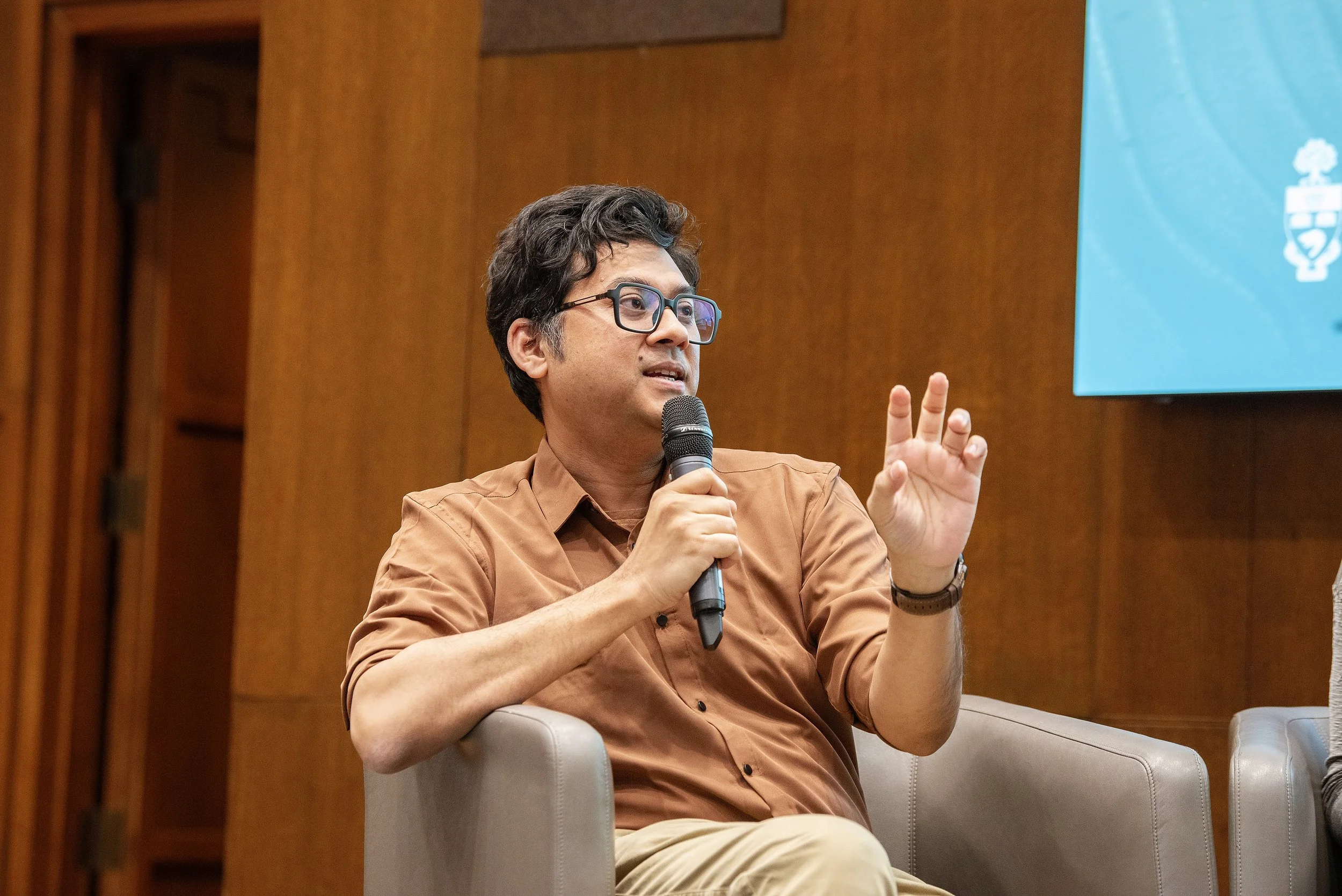
From legal scarcity to legal abundance: Benjamin Alarie on Superjustice
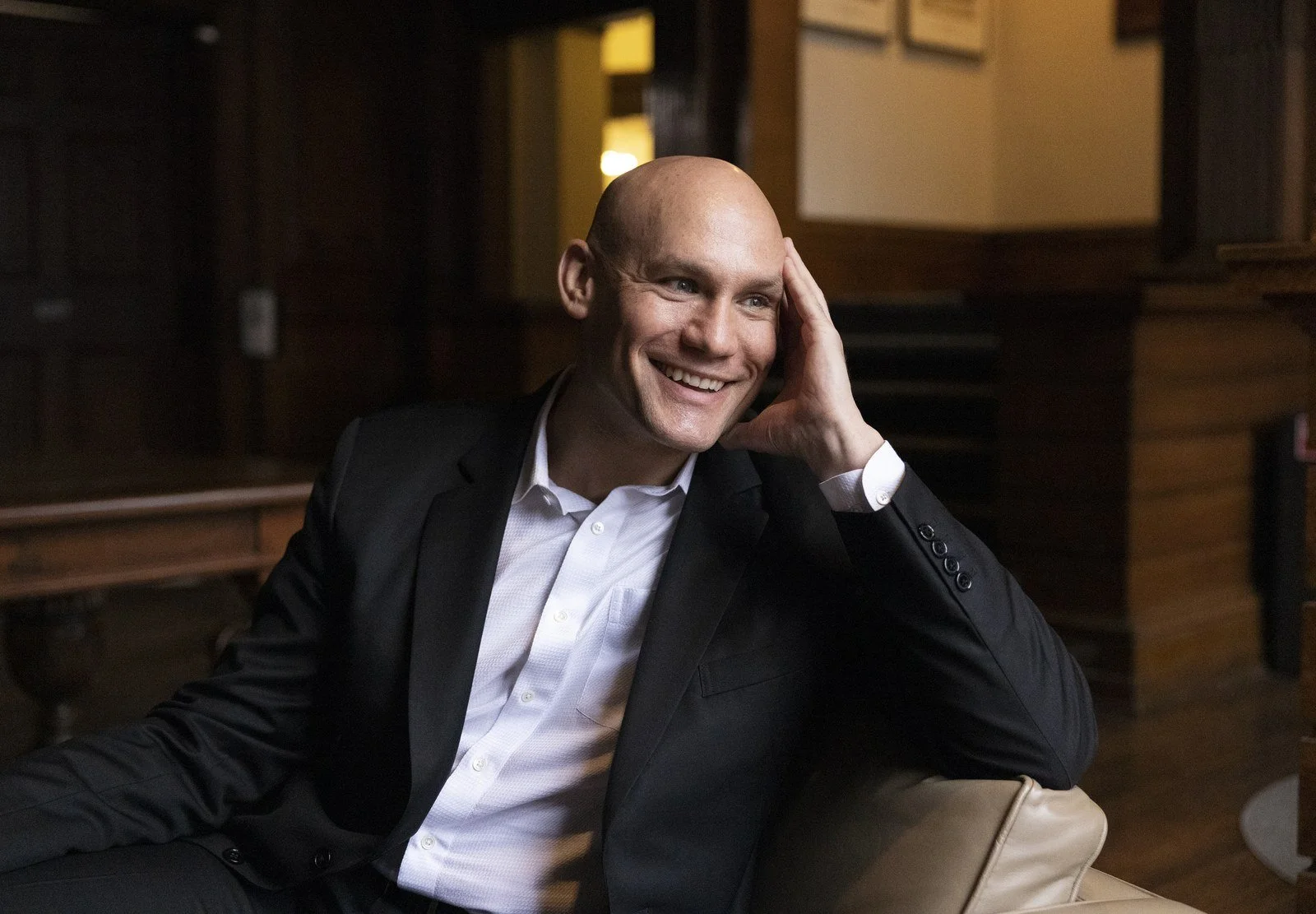
SRI Faculty Affiliate Benjamin Alarie’s new book, co-authored with Samuel Becher, argues that AI could move legal systems from scarcity to abundance. In conversation with SRI, he discusses personalized law, what must stay human in a courtroom, and why he believes legal scholarship has tilted too far toward pessimism.
In 2016, Benjamin Alarie published a short article in the University of Toronto Law Journal arguing that legal prediction was about to become far more achievable than lawyers assumed. He did not expect it to touch a nerve. It did—and the response shaped the next decade of his work.
That article led to a book, The Legal Singularity (University of Toronto Press, 2023, with Abdi Aidid) and has now led to a second book, Superjustice: Law in the Age of Artificial Intelligence, published by Oxford University Press this summer. Co-authored with Samuel Becher, Superjustice asks what legal institutions should look like if the constraints that have always made justice scarce are lifted through transformative advances in artificial intelligence (AI).
Alarie is the Osler Chair in Business Law at the University of Toronto, a faculty affiliate of both the Schwartz Reisman Institute for Technology and Society (SRI) and the Vector Institute, and CEO and co-founder of the legal AI company Blue J. SRI spoke with him about where the book came from and what he thinks should never be automated.
This conversation has been edited for length and clarity.
Schwartz Reisman Institute: The Legal Singularity came out in 2023, and an enormous amount has changed since. What made this the book you wanted to write next?
Benjamin Alarie: It raises the question of why I wrote The Legal Singularity in the first place, so maybe I’ll start there. That project came out of a nerve I feel I touched. In 2016 I wrote a short article in the University of Toronto Law Journal called “The Path of the Law: Towards Legal Singularity,” claiming that legal prediction was going to become increasingly doable, leveraging machine learning and artificial intelligence.
It spawned a totally unexpected, seemingly visceral, and quite emotional academic response. Some people got very animatedly upset, and then proceeded to attack a strawman version of the argument. That prompted my co-author Abdi Aidid and me—who were living a lot of this at Blue J, building the technology, seeing what was possible on the ground—to set the record straight and make the argument more powerfully than you can in ten or eleven pages. We dedicated an entire chapter to defending it against its critics, steel-manning their positions, and then taking them on. It took four years.
And then the most amazing thing happened. We finished the book, it went through peer review, it was in production—and then ChatGPT arrived and made so many of the criticisms seem quaint. A lot of the arguments against us were empirical questions. People were saying it’s impossible for computing to do the things you say it can do. Well—let’s see. The future arrived faster than either of us thought it would.
Meanwhile I reconnected during COVID with Samuel Becher, a good friend from Yale Law School—we were graduate fellows together more than twenty years ago. We rekindled a scholarly connection, started talking about the future of AI, and one thing led to another. The whole idea was: I don’t think the world was ready for this thing that many people were claiming wasn’t even possible. Now I’m even more convinced it’s possible. So, what should we do to prepare our institutions, and our thinking, for a world in which legal scarcity could be a thing of the past?
“We’ll replace legal scarcity with legal abundance, and a lot of the existing binding constraints in our legal institutions will be relieved.”
We’ll encounter different kinds of bottlenecks, different things we need to contend with. But we had better start thinking about it now, before this happens. It comes from a place of cautious optimism—a belief in the improvement to society that can come from leveraging AI in the legal system, but also an acute awareness that it won’t happen automatically. Samuel and I will never pretend to have all the answers. But let’s point in the direction of the things that are possible.
I also want to set the record straight about something. So many academics, particularly in law, are very negative and cautious, and focus on the potential downsides of these technologies. There is certainly a place for that. Think about the Wright brothers at Kitty Hawk, trying to get a heavier-than-air craft off the ground reliably—and then the safety engineers worried that going 35,000 feet into the air in a big contraption could lead to a lot of death and destruction. There’s a role for both. I feel like, especially in academia, the dial is turned very much to the safety engineer end of the spectrum, rather than being a bit more balanced, which is where I think it should be.
SRI: You and Becher argue that the “reasonable person” at the centre of the legal system is a far more specific character than the system wants to admit—what psychologists call WEIRD: Western, Educated, Industrialized, Rich, and Democratic. Can you unpack the significance of that for the book’s claims about access to justice?
Alarie: A big part of what I envision is a system that is not one-size-fits-all. One of the criticisms of the legal singularity idea was that people focused on the word “singular”—as though this was going to be a monolithic, untailored, impersonal, oppressive legal system. That is not at all what I had in mind, and Samuel and I are really at pains in Superjustice to imagine a truly dynamic and responsive legal system that responds to different normative value sets.
A lot of it is going to rhyme and look very similar around the world. There’s a lot of overlapping consensus in the different normative frames that people bring to a legal system. And then there are frames that would yield different answers. It’s hard to find a universally defensible epistemic foundation for all of law, and we want to carve out room for one community, or one part of the world, to deal with legal problems—human problems, really—differently from how they’re dealt with elsewhere.
If we think about the legal system in Toronto in 2026, it is going to reflect that WEIRD individual. But is that for sure the right legal system for every city in every country around the world? Not necessarily in the same way. The discussion in the book is meant to say: this is a live consideration. We should contextualize everything, including ourselves, in thinking about how legal systems might promote human flourishing in different times and places.
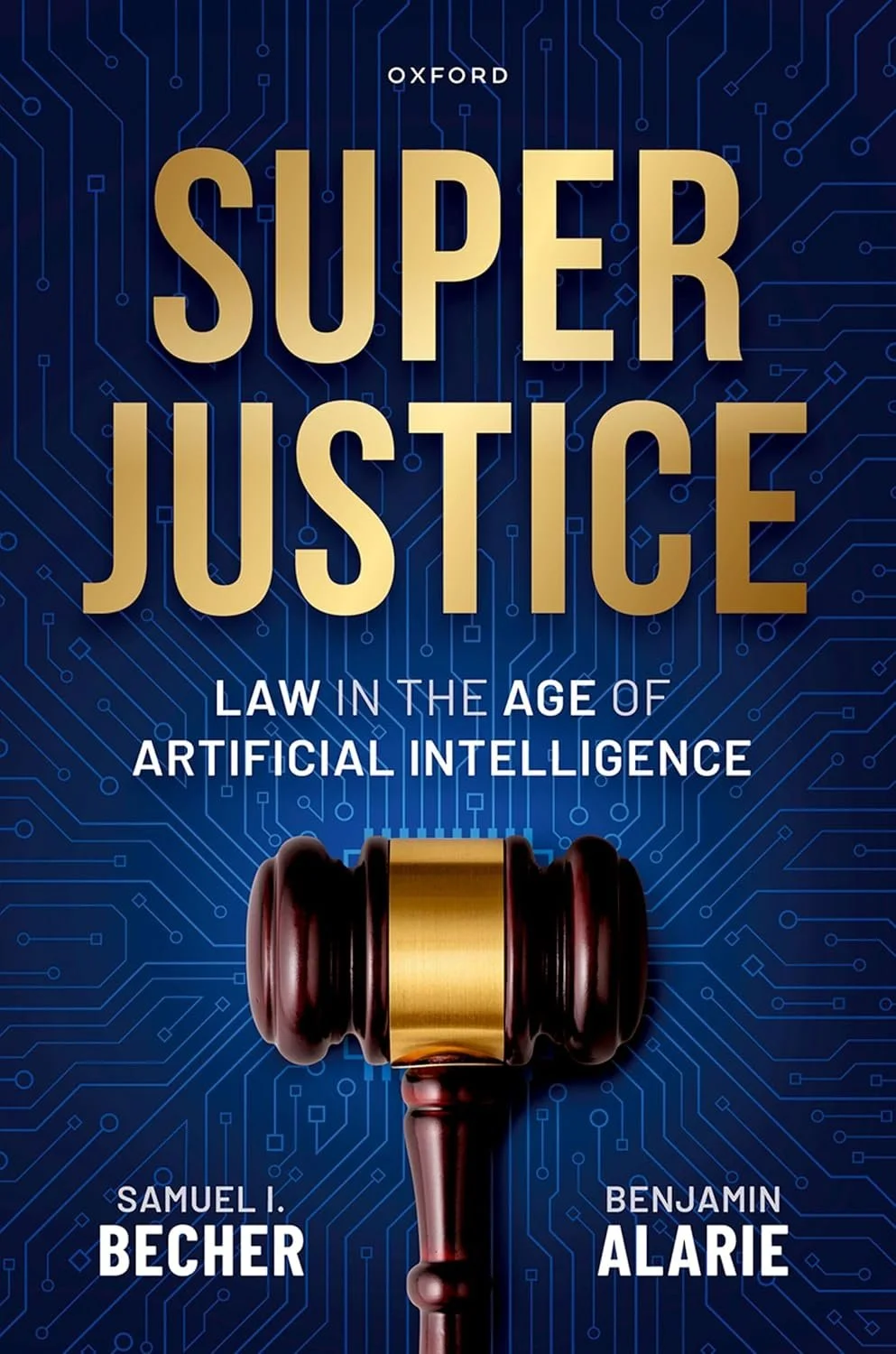
Superjustice: Law in the Age of Artificial Intelligence (2026), is published by Oxford University Press.
SRI: One of the boldest ideas in the book is personalized law—legal rules tailored to a person’s actual circumstances instead of one standard applied to everyone. You point out that this already exists in some instances, like sentencing or accommodations for disability. But if each of us is eventually governed by a slightly different rule, is it still a law we share?
Alarie: A lot is in how we think about the law. One way of characterizing the tax system is to say we’re all subject to the same rules in the Income Tax Act. From a very different perspective, it’s an extremely strong example of personalized law, because at a more granular level, the amount of tax each individual ultimately owes for a year is highly personalized. It depends on that person’s circumstances. I have yet to hear anyone say the Income Tax Act is not really law because it leads to different taxpayers paying different amounts.
Take another example. A typical two-lane highway in southern Ontario has a speed limit of 80 kilometres per hour. It doesn’t matter if it’s the middle of the day or the middle of the night, if it’s a snowstorm, if it’s foggy, if there are blizzard conditions. It doesn’t matter if you’re an F1 driver, or a newly licensed driver, or 99 years old—you still have the same speed limit, even though the weather could be vastly different, the road surface could be vastly different, and your capabilities as an operator of that vehicle could be wildly different.
I could easily imagine a system that gauges your alertness. You wake up, it’s a beautiful spring day, it’s mid-June, it’s sunny, there’s no traffic on the road, you’re alert, your vehicle is in great shape—your speed limit this morning is 103 kilometres per hour on this road. Have at it. And I can equally imagine blizzard conditions, a newly licensed 18-year-old driver, a little bit nervous, very slippery, the same roadway, and your speed limit right now is 26 kilometres per hour, because driving any faster is as risky as driving 103 in near-ideal conditions. And everything in between.
The reason I don’t find that offensive is the same reason I don’t find the tax example offensive. It’s the same rule system, tailored to different circumstances, and overall, it’s optimizing for human flourishing.
“So long as you have a formula for figuring out the speed limit for different circumstances, that’s the same law. We’re just actually using that formula to produce a result.”
SRI: The book also takes seriously the idea that some things about law and justice are irreducibly human—empathy, moral judgment, the feeling of being heard. In an AI-enabled legal system, which of those do we have to be most careful to retain?
Alarie: I think the most important thing is that we keep humans at the centre. There’s a risk of becoming, in some ways, subordinated to our technology. We should maintain this posture with respect to technology: that the technology is really in service of human flourishing. This may be a strange source to cite, but Pope Leo XIV’s recent encyclical, Magnifica Humanitas, is talking about precisely this issue. I'll leave the theology to others, but from a values perspective it aligns closely.
We should be leveraging technology to take it to machine scale—that’s a huge advantage, and it should be an advantage for humans. How do we promote human dignity, and healthy individuals, healthy families, healthy communities? The risk is that too much concentration of power and wealth finds the technology an instrument for perpetuating or deepening that concentration. That’s not a good outcome for human flourishing. I take it this is perfectly consistent with the values of the Schwartz Reisman Institute as well. How do we make sure that, architecturally, human values are the cornerstone of more automation in our legal systems?
SRI: In the case of judges, where do you see AI being helpful, and where wouldn’t you want it anywhere near the bench?
Alarie: Being a judge is a profoundly demanding office. You’re asked to render decisions that affect other humans’ interests very profoundly—liberty interests in criminal sentencing, custody of children, whether someone can continue living in a particular place. These are profoundly important questions.
Technology can play an amazing role in helping judges grapple with existing legal authority, identify and respond to the very best arguments, and think through the strengths and weaknesses of different positions. I can easily imagine becoming comfortable with judges consulting AI systems in understanding and testing the evidentiary record—helping them in their roles as fact finders, and then as law finders. Help me figure out the facts, and then let me figure out what precisely the law requires.
But ultimately, I want the judge themselves endorsing that outcome, saying: yes, this is what the record supports, and this is the conclusion I’m going to reach. It gets to the dignitarian aspect of it. And it’s not because humans are perfect, or because the human judge is sublime in their ability to understand reality and will forever be better than machines. It’s that I’d rather have a human judge paired with this technology, diligently exercising the duties of their office in good faith, because I think that gives us a better and more effective legal system.
SRI: The book closes with a question that seems deliberately left open: if AGI-empowered justice becomes clearly better than human professionals, will humans end up barred from the justice loop—and is that something we would accept?
Alarie: I think it’s extremely difficult, and I think we need to leave it to future generations to figure out. I don’t have the right answer. On the one hand, I’m tempted to answer that of course we always need to have humans involved, because that feels right. There’s an emotional pull to that conclusion. It feels safer. It feels like a bit of a warm blanket.
On the other hand, if we accumulate enough experience with these systems and actually learn to trust them, and we come to believe that any disturbance by a human of the answer coming out of the system would make it worse—then somebody with sound judgment would say we probably do not want humans to interfere. Maybe at that point it is a true legal singularity.
The intuition may become clear with an analogy to chess. Twenty-five years ago, Garry Kasparov plus the leading chess engine would have been the most formidable opponent on Earth, and Garry could add value to the way the engine proposed to play the next move. Fast forward to today. Magnus Carlsen is the strongest chess player in the world, and I think Magnus would say that against a state-of-the-art engine, even on modest hardware, he would have no chance, and he wouldn’t second-guess the moves it played. The best he could hope for would be a draw. So would we want somebody second-guessing the moves of the equivalent in the legal sphere?
We may still say yes, because we may still say we need that interrupt, that dignitarian protection—it’s part of keeping justice human-centred. It might equally be argued that those interrupts are more likely to produce injustice, and more likely to be co-opted by forces that aren’t happy with true justice, whatever that may mean. So we get into this very difficult paradox: what is the dignity-maximizing move with respect to very advanced technology deployed in the legal system? We left it unresolved because both positions are susceptible to a very strong counterargument. I’ll speak for myself: I don’t have my view fully worked out.
SRI: What has the response to the book been so far?
Alarie: Very positive. It’s getting to the point where Samuel and I are deciding how to split up the talks and where each of us can be at any given time. Samuel is speaking at Seoul National University in September; I’ll be speaking at the Creative Destruction Lab in Toronto. Then there’s the London School of Economics, Amsterdam, Yale, Notre Dame, the National University of Singapore, Stanford, Kyoto, Cambridge and others—all either scheduled or in the works over the next ten months or so.
This is why we wrote the book. We wanted to foster this dialogue and reset people’s thinking, to reset the dial a little bit back toward the positive, because we really think this can be transformationally positive for human flourishing. But let’s not be Pollyannish and ignore the fact that there are some serious risks here too, and let’s give those risks appropriate air.
Really, though, let’s also be optimistic, and let’s be more like the Wright brothers. Because after all, it’s not like they flew their machine somewhere profoundly unsafe. They went to the beach because the sand is nice and fluffy, and if they crashed—and they expected to crash—they figured it would absorb it, and no one would be hurt. They were very thoughtful about where they did their tinkering. We should all take a little bit of inspiration from the Wright brothers as we think about these technologies: be excited about the possibility, as they were, and also cautious about what could go wrong, and plan for that as we work to get the legal system airborne using AI.
Want to learn more?
Browse stories by tag:
- AI
- AI safety
- AI trust
- Computer science
- Computer security
- Copyright
- Cybersecurity
- Data
- Democracy
- Economics
- Education
- Engineering
- Ethics
- GPO-AI
- Governance
- Health
- Human Rights
- In the Media
- Jobs
- LLMs
- Law
- Normativity
- Philosophy
- Political Science
- Privacy
- Privacy Series
- Psychology
- Public Policy
- Recommenders
- Regulation
- Religion
- Reports
- Trust
- Workshops